


Global Indigenous Monarchical Alliance
Sovereign Founding Members

His Royal Majesty King Dada Agonlinhossou Yeto Kandji
Sovereign Founder Member
Kingdom of Agonlin The Agonlin region was founded in the 17th century, specifically around 1634, by Yéto and corresponds today to the communes of Covè, Zagnanado, and Ouinhi, in the Zou department. Yéto and his family led a peaceful life there, based on agriculture, hunting, and livestock farming. This tranquility was disturbed by a sparrowhawk that regularly attacked the chicks raised by the family. One day, after the bird had carried off a chick, Yéto chased it into the forest. He managed to shoot it less than two kilometers away, as the sparrowhawk was perched on a fan palm. At that spot, Yéto planted a stake under the fan palm, called "Agontéglé" in the Fon language, to mark this place, which had become important to him. There, he performed a ritual ceremony, invoking the power of his deity Bossikpon, and kept a sample of the sand from the soil, which was considered fertile. The site had sixteen fan palms, which reinforced its symbolic character. On the way back, so as not to get lost, Yéto carefully plucked the sparrowhawk and threw the feathers away as markers. He then met a gravely ill old man, La Fan, suffering from leprosy, living in isolation in a hut deep in the forest after being rejected by his family. This place, called Todo, was located about 500 meters from the sixteen fan palms. It is now one of the neighborhoods of the Agonlin-Houégbo district. Surprised to see him all alone in the forest and truly unhappy, the hunter Yéto offered him the sparrowhawk he had killed and told him about his misfortune. He promised La Fan that he would return to see him very soon. This was the beginning of their friendship. Returning to his wife, YÊTO consulted the oracle on the sand he had collected, and it was revealed to him that he could freely inhabit this place (under the palm tree). Later, YÊTO's wife, TANGNIN-GA, died. Several days after his wife's death, YÊTO returned to build his house "under the palm tree," where he had planted the stake; he settled there with his three children (AGLO, KPOSSOU, and KPOSSI). He named this place "AGONLIN," meaning "under the palm tree," a name which, from then on, was given to the entire region between the Zou and Ouémé rivers. YÊTO, the first inhabitant of this space, installed his deities Bossikpon and Nouhouayi there. He ordered the immigrants to build their homes next to his and thus named his own house (the first one) "HOUEGBO," which means "BIG HOUSE" in the local language. This is the origin of the name "HOUEGBO," which, combined with "AGONLIN," forms "AGONLIN-HOUEGBO," meaning "The big house under the palm tree," a name still borne today by one of the districts of the Zagnanado commune. The inhabitants referred to as "Agonlinu" are those who are locally designated and recognize themselves as such, occupying the region that bears their name. YÊTO reigned until his death in 1731. Four kings (sons and grandsons) succeeded him, but the throne remained vacant from 1986 to 1993. On February 24, 1993, the throne was restored with the enthronement of His Majesty YÊTO KANDJI, great-grandson of OTTI. His Majesty Dada Agonlinhossou Yêto Kandji, the 5th King of Agonlin, has peacefully governed the regions for 33 years. As the organizing head of the High Council of Kings of Benin, His Majesty Dada Agonlinhossou Yêto Kandji sets the standard for traditional leadership in the country. His Majesty is also the first Vice-President of the Council of Mahi Kings of Benin. The creation of the Agonlinhossou Yeto Kandji Foundation is a manifestation of his bold vision for the development of the kingdom, aiming to bring development and well-being to its people. The Foundation holds special consultative status with the United Nations Economic and Social Council (ECOSOC).
123-456-7890


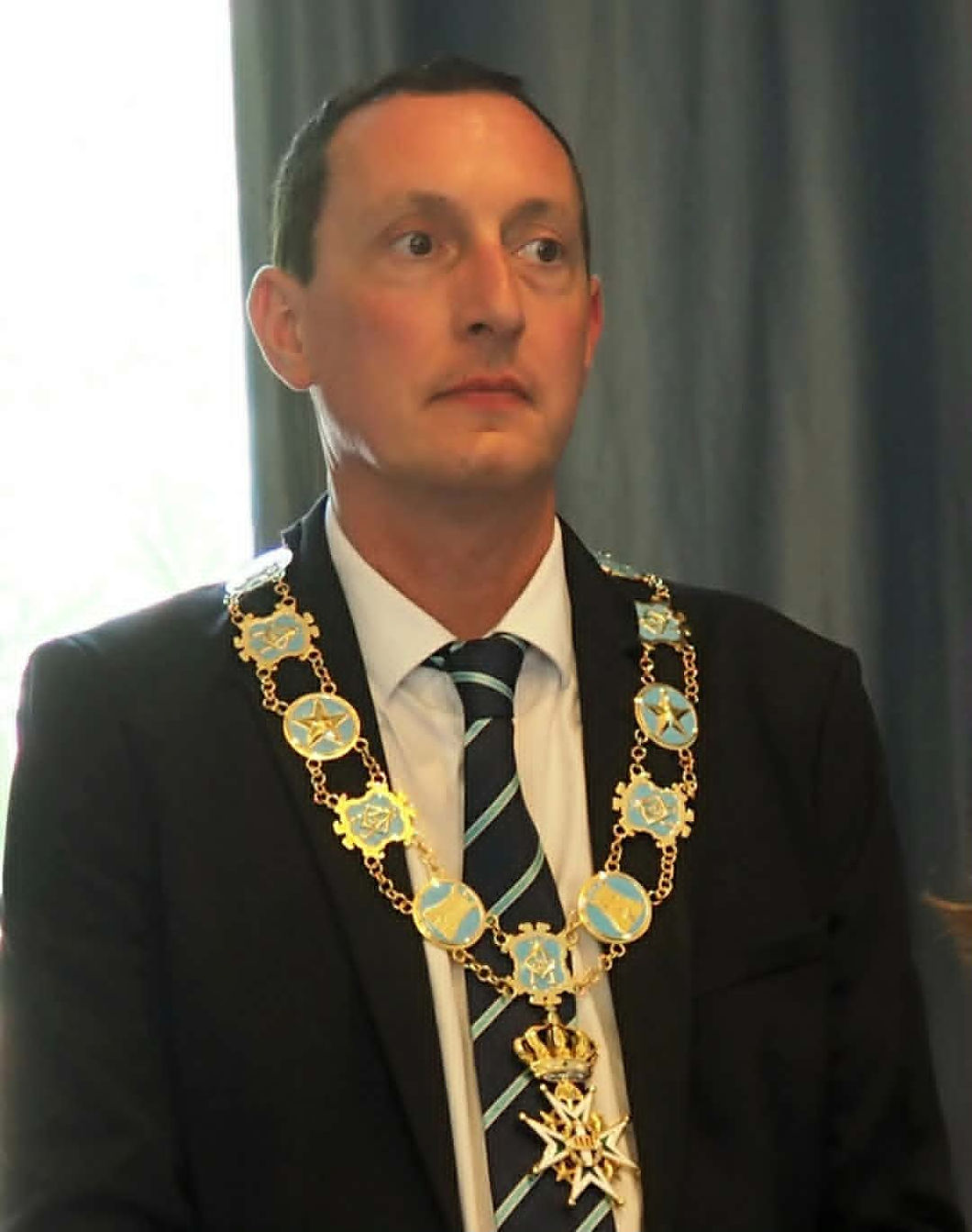
His Royal Highness Prince Antoine V, Futha Apo Toki
Sovereign Founding Member
The Kingdom of Araucania and Patagonia
Consent to the establishment of the Kingdom of Araucania and Patagonia was given by Mapuche Toki Magnil (High Chief of the Mapuche Nation) and Lonko (Chiefs) Kalfukura; Kilapan; Montril; Quilahueque; Marihual; Lemunao; Huenchuman and Huentecol among others. The Kingdom was founded in Wallmapu (Mapuche ancestral territory) in a traditional Futa Koyang (Mapuche constituent assembly) on 17 Nov 1860, In adopting a Monarchical system of governance, the Mapuche Lonko’s elected French lawyer and Mapuche Ally Orellie Antoine de Tounens was appointed as founding Monarch.
The founding Lonko’s comprised cabinet of the first Ministers of State. The King entered Exile in France in 1862 after being kidnapped, arrested, placed on trial and then deported for sedition, immediately prior to the illegal military and genocidal invasion of Wallmapu by the colonial republics, known as the ‘Pacification of Araucania’ in Chile, and the ‘Campaign of the Desert’ in Argentina.
The Monarchy has remained in exile under the reigns of successive Sovereigns to the present day, with H.R.H. Prince Antoine V assuming the throne following the free and willing abdication of Prince Frederic I and his election by the Regency Council on 12 May 2025.
123-456-7890

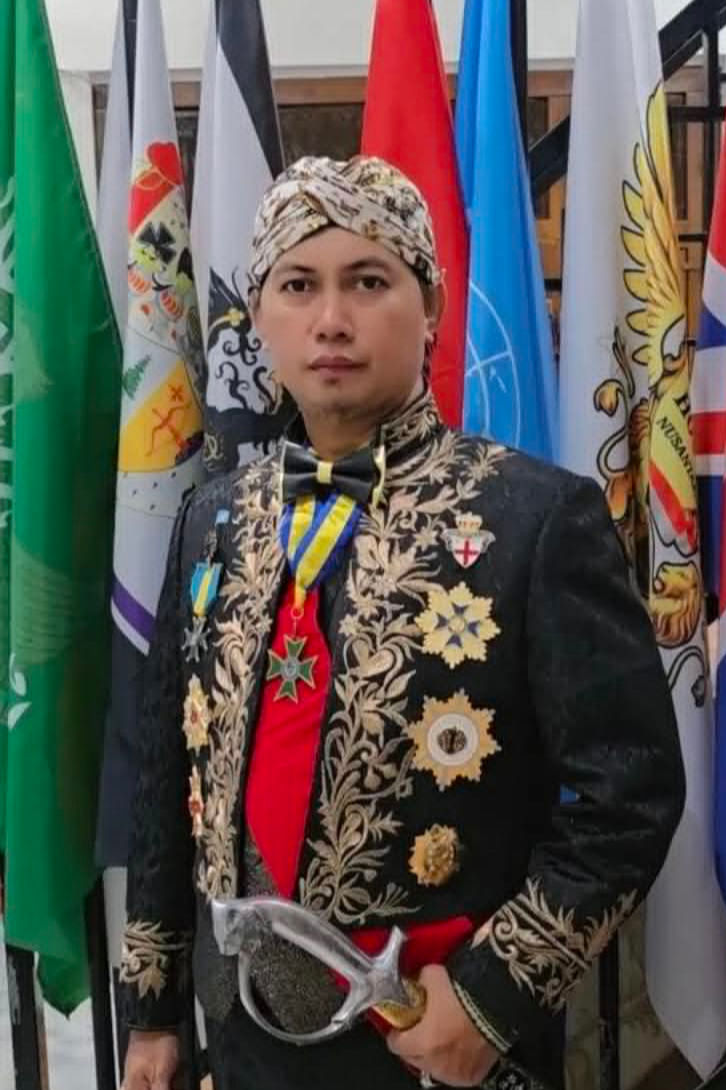
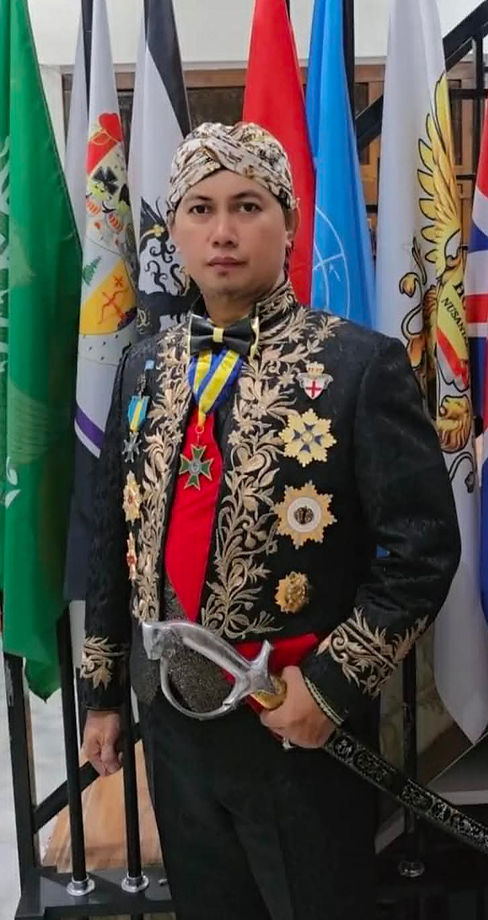
His Royal Majesty Prince Mohammad Soleh Ridwan
Sovereign Founder Member
The history of the Kingdom of Pajajaran/Sunda-Galuh
The Kingdom of Pajajaran is the last great Hindu-Sunda kingdom in West Java before Islam spread. Its capital was Pakuan Pajajaran, now Bogor area.
1. Origins & Timeline • Founded in the 12th century, around 923 CE by Sri Jayabupati
• Roots: The successor of Tarumanagara split into the Sunda Kingdom & the Galuh Kingdom, later reunited as Sunda-Galuh/Pajajaran
• The name: "Pajajaran" came from "Pakuwuan" meaning "a place"/capital city 2. Golden Age under Sri Baduga Maharaja = Prabu Siliwangi
• Reign: 1482-1521 CE or 1474-1513 in some sources
• Capital moved: He moved the capital to Pakuan because it was strategic and surrounded by natural defenses • Condition: Portuguese traveler Tomé Pires in 1513 described Pajajaran as just, prosperous, and active in trade, rice, pepper and woven cloth 3. Government & Territory The Federal system ruling several vassal areas: Sangiang, Banten, Cirebon, Sindangkasih, Galuh, Saunggalang, Kawali, Pakuan 4. Famous Kings
• Prabu Harisdarma 1192-1217
• Prabu Niskala Wastu Kancana 1329-1357 • Prabu Wastu Kancana 1418-1474
• Prabu Raja Siliwangi/Sri Baduga Maharaja 1474-1513 - most legendary
5. Decline & Fall After Sri Baduga Maharaja died, the kingdom weakened due to pressure from Islamic kingdoms: Cirebon, Demak, Banten 1579: Banten Sultanate conquered Pakuan and took the royal throne Palangka Sriman Sriwacana. Frequent changes of King and unstable conditions sped up the collapse.
6. Legacy & Inscriptions Evidence comes from inscriptions like Cikapundung, Batu Tulis, Huludayeuh, Ulubelu, Kebon Kopi II. Also sites like Karangkamulyan linked to Ciung Wanara legend.
Cultural note: Pajajaran is remembered through "Sunda Wiwitan" traditions, Kawih, and the figure of Prabu Siliwangi in Sundanese folklore.
His Royal Highness Prince Mohammad Soleh Ridwan is the descendant of Sri Baduga Maharaja's Daughter, His Majesty Maharaja Daughter's name Raden Nyi Mas Rara Santang or Her Moslem name Syarifa Mudaim who had been married by Sultan Mahmud Abdullah/Sultan Syarif Abdillah, and had two children :
• Mawlana Syarif Hidayatullah and
• Mawlana Syarif Nurullah The Great Grand Father of Prince Mohammad was descendant of Maulana Syarief Hidaytullah or Sultan Cirebon I. His Royal Majesty Prince Mohammad Soleh Ridwan’s Great Grand Father is Sultan Cirebon, Panembahan Ratoe Girilaya II. He is therefore the decendant of Sultan Cirebon or Panembahan Ratoe Girilaya II from the Descendant of Prince Alas.
+62 813-1319-3639
H.R.M. Sultan Kacirebonan with (right) H.R.M. Prince Mohammad Soleh Ridwan of the Legacy Kingdom of Pajajaran, of the coalition of Royal families of Nusantara Indonesia